Solana in India 2026: Builders, Fellowships and Jobs
Solana in India 2026: Mumbai summit, the India Fellowship, DeCharge, Umbra and KAST, plus jobs, pay, tax and grants for job seekers and investors.
By Solana Teams · · 5 min read
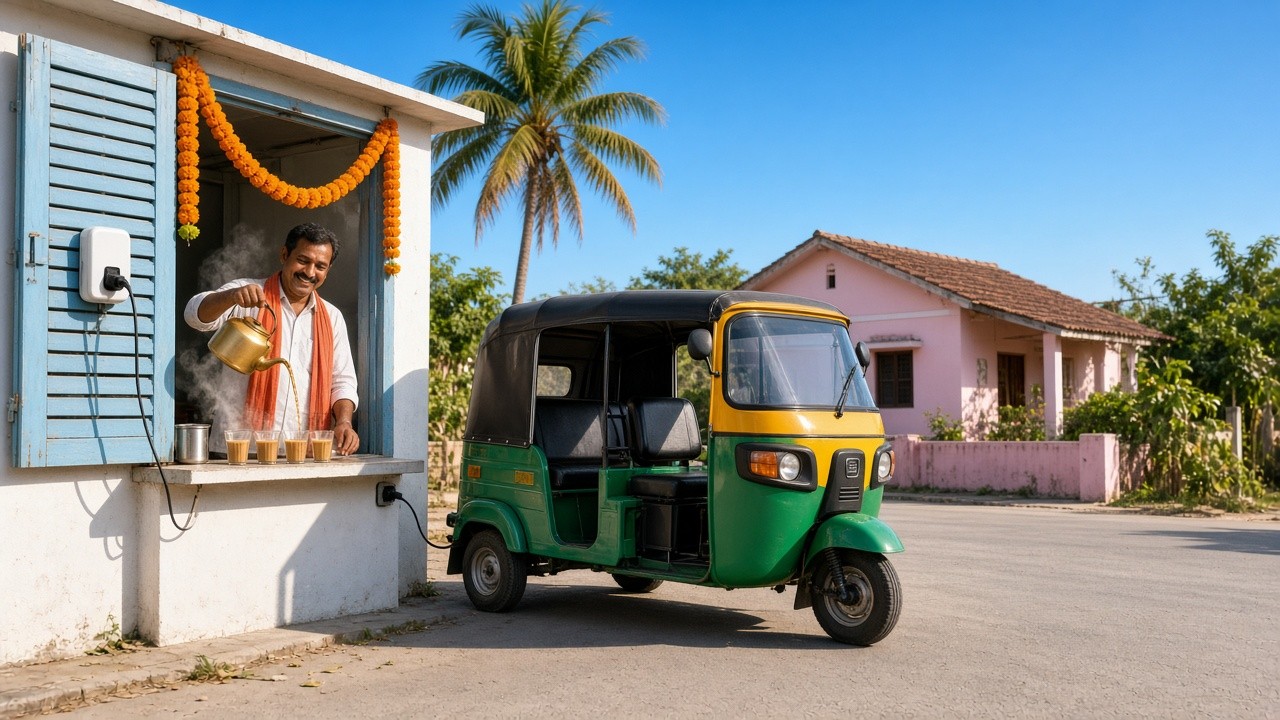
India has spent years being described as the place that supplies developers to everyone else's crypto projects. In November 2026 that story started to look out of date.
On 2 November, Solana Summit India filled the JW Marriott in Mumbai for a free, full day of talks and workshops. The next day, Devcon 8 opened across town. For one week, Mumbai was one of the busiest crypto cities on the planet, and Solana showed up with a clear message on its summit site: India doesn't just use Solana, it builds on it.
So what does that actually mean if you want a job, want to start something, or want to back the teams coming out of India? Here's my take.
The numbers behind the hype
The most useful stat from the summit wasn't about price. It was about people. According to the Solana Summit India site, Indian sign-ups for Colosseum hackathons have grown 5.2 times across five hackathons. That's not a marketing campaign. That's a pipeline.
The speaker list told the same story. Harkirat from 100xDevs and Superteam India, Srijan Shetty from Fuze Finance, Kru and Abbas from Umbra, the CTO of Titan Exchange, Dean from Blueshift and Atsushi from Jito were all on the bill. Several of those are Indian founders running teams with global users. That's the shift: from "Indian talent working for foreign projects" to "Indian founders running their own".
How Indian developers are getting in
The Solana India Fellowship
The biggest on-ramp this year was the Solana India Fellowship, run by Superteam India with 100xDevs. It was an eight-week bootcamp with 40+ assignment modules, weekly shipping, contests and one-to-one technical interviews. More than 200 developers took part, and the top 20 each received a $2,500 stipend after demo day at the end of June.
That last bit matters. $2,500 is real money for a student or junior developer, and it's paid for proof of work, not a degree.
Hackathons that turn into companies
Here's a story I love. One solo builder, working a full-time job on the side, built AgentTrust, a trust layer for agent-to-agent payments on Solana. It placed fourth in the 100xDevs track at Colosseum Frontier and won $1,000. He kept building, then received a $3,000 grant from Solana Foundation India. That's the path in miniature: hackathon, small prize, grant, momentum.
Another example is Trenchers AI, co-founded by a Chennai-based Rust developer who previously worked at Turbin3 and 100xDevs. Indian builders are moving from course to contributor to co-founder in a couple of years.
Indian teams worth watching
DeCharge: EV charging as a Solana asset
DeCharge, based in Hyderabad, is one of the best examples of Solana being used for something physical. It runs a community-owned EV charging network, a bit like Airbnb for chargers: people buy and host chargers and earn from usage. It raised a $2.5 million seed round in March 2025 led by Lemniscap, with Colosseum taking part.
The clever part is its DePINFi pools. People deposit USDC or USDT into a Solana program that funds a specific charging site, and the yield comes from that site's charging revenue. Blockworks Intel reported 1,500+ chargers supported as of December 2025. Its CHARGE token was set to launch in June 2026. If you care about DePIN, this is a team to follow on decharge.network.
Umbra: privacy built by Indian founders
Umbra is a privacy protocol on Solana with Indian co-founders. Its ICO on MetaDAO in October 2025 drew $154.9 million in commitments, capped at $3 million, with the rest refunded. Demand was roughly 50 times what they took. Investors notice numbers like that.
Global money, Indian investors
The money is flowing both ways. Peak XV Partners, one of India's best-known venture firms, took part in KAST's $80 million Series A, which valued the stablecoin fintech at about $600 million. KAST issues its own stablecoins on Solana. And Fuze, whose co-founder Srijan Shetty spoke in Mumbai, raised a $12.2 million Series A led by Galaxy and e& Capital, partly to explore entering India.
The honest downside: tax and grants
I'm optimistic, but let's be real about the headwinds.
Tax is tough. India taxes gains on crypto at a flat 30%, with 1% TDS on transfers and no way to offset losses. Those rules carried into the new Income-tax Act, 2025, which took effect on 1 April 2026. At Devcon in Mumbai, Vitalik Buterin said the regime could disproportionately burden smaller developers and hold back innovation. If you're paid in tokens, they're generally treated as income when you receive them, and selling later can be taxed again. Talk to a local tax adviser before you accept a token-heavy offer.
Compliance is real. Businesses that exchange, transfer or hold crypto for others must register with FIU-IND under India's anti-money-laundering rules. That favours teams that build serious compliance early.
Small grants are paused. According to web3grant, Superteam's regional Solana Foundation Instagrants have shown "Applications Paused" since around April or May 2026. Before the pause, the India listing had awarded 127 grants averaging about $4,800. The good news is that the Solana Foundation's own grants are still open for open-source and public-good work, and Superteam Earn bounties keep running.
What the jobs look like
Most Indian Solana talent works remotely for global teams, and pay reflects that. Superteam Talent, the Solana-only recruiting agency, listed a Founding Backend Engineer role in Bangalore at $50k–$80k in August, alongside remote Rust roles across APAC at $150k–$225k. My read: Bangalore-based roles still pay well locally, but the top money goes to people who can compete for global remote jobs.
The skills in demand are clear:
- Rust and Solana programs. Still the fastest way to stand out.
- Payments and stablecoins. Teams like KAST and Squads are building business finance on stablecoin rails.
- AI agents. Builders like AgentTrust show where hackathon judges are looking.
- DevRel and content. Superteam Talent itself was hiring a remote Content Lead in October.
Browse Community & Education and Payments teams for places to start.
My take for job seekers and investors
For job seekers: India might have the clearest path into Solana anywhere right now. Join your local Superteam chapter, do the bounties, enter the next Colosseum hackathon and ship in public. Proof of work beats a CV, and the people hiring are watching.
For investors: Watch the pipeline, not the price. Five hackathons of growing sign-ups, Indian founders raising global rounds, and real-world products like DeCharge are signals that last longer than any token chart. Just price in the tax and regulatory risk honestly.
India's builders aren't waiting for permission. That's why I'm excited.
What to do next
Explore the teams hiring and building right now on the Solana Teams directory. Start with Superteam, Colosseum and the Solana Foundation.
Building on Solana from India, or anywhere else? List your team on Solana Teams so job seekers and investors can find you.